Thursday, November 6, 2014

Tokyo Part II

Second part of this post got a little photograph heavy and Blogger was having a tough time coping, so Tokyo is going to turn into a three past post as well! 

We'll start with Ueno Park, located right outside of Ueno Station only a few stops away from Tokyo Station. The park is quite large and well populated during the weekend. 


Like most Japanese parks it's a lot of flat open gravel pathways leading to different corners of the interest, including shrines, monuments, torii gates, and - my personal favorite - museums. It's great fun to just walk around and explore, you never know where you'll end up. Though the shrines were not as impressive after seeing Kyoto, I'm a huge fan of the juxtaposition between the red torii gates in wooded backdrops so there were plenty of great photo opportunities during my walk.


One standout shrine was Toshugu Shrine which houses fifty copper lanterns, original pieces that were given as offerings from feudal lords. The rusting copper gave the whole area a very unique atmosphere. There was also a quiet corner with a little dove shaped memorial surrounded by paper cranes which instinctively made me think of Hiroshima. Inside of the steel dove, shielded from the elements, but clearly visible through glass, is a single candle, a flame ignited by a flame from the Hiroshima bombing that the nephew of the one of the victims brought back to Tokyo as a reminder of peace.


As mentioned Ueno Park is home to many museums, including the Museum of Nature and Science and the Museum of Western Art. I knew that I wouldn't hardly have enough time to appreciate all of them, so I decided to check out the Tokyo National Museum. Turns out the National Museum is better described not just one museum but many different themed galleries all enclosed in one gated area. The architecture of each building was different making the view in and of itself interesting. Inside the galleries were thorough, but not excessive. Unlike some other galleries, instead of showcasing thirty pieces of mediocre pottery, they chose instead to high one or two stand out pieces that were really interesting. The well-written English explanations were also really helpful. Well worth spending a few hours making your way through these buildings. 


 That's it for Part Two. Next installment soon to come.

Sunday, November 2, 2014

Tokyo Part I

Tokyo was another city that I wanted to cross of my sightseeing list. Unfortunately it is a really big city and there are tons of things to see and do. In one respect this is difficult because there is no way you can really do everything in just a few days. But because there is so much variety, you can generally find things really catered towards your interests (there is a street that is literally lined with used bookstores (ie. heaven) but on to that in the next post).

Being a big city filled with skyscrapers (Japanese architecture has really mastered the vertical climb as land is so little and so expensive) and Tokyo best seen in panorama at the top of a tall building. In 1958 the Tokyo TV tower was built primarily for broadcasting purposes, but soon became an attraction open to the public to get a good view of the city.


Tokyo Tower (Japan-Guide.com)

The orange Eiffel Tower shaped building sticks out when you get up near it, but because the city has expanded so much since it's construction, it actually doesn't give you a complete uninhibited view. Many of the building surrounding measure up just as tall and imposingly when you're looked. Nevertheless it was quite cool to see.

 THE VIEW FROM THE TOP!


Because the Tokyo Tower just isn't high enough any more, the city has constructed a newer modern counterpart called the Tokyo Sky Tree which just opened up in 2012. The building is almost twice as tall as the TV tower but it's purpose is specifically for tourists to see the city.
Tokyo Sky Tree (Japan-Guide.com)

THE VIEW FROM THE TOP!


What I liked most about the Tokyo Sky Tree was actually inside of the building, before you got up to the viewing platform. All over the entrances there were murals with animated flat screens integrated into the painted backdrop showing the city in motion and little clipping of history or fun facts about the city. It made the half hour wait (and that was short!) go a bit shorter.


Asakusa Temple is probably the one of the most visited temples in Japan, because it's right in downtown Tokyo. Like many temples in Japan, it is a little mecca in the bustling downtown, except that Asakusa is so popular, it's basically like being in the city any way. The large red lantern that is visible from the main street is the entrance to Temple.

Surrounding the large temple is shopping street with lots of foreigners and locals haggling over snacks and souvenirs. Once you get past the crowd you get to the temple itself which is very large and very ornate. There was a pretty sizeable crowd of people inside, praying. There is also a pagoda and a torii gate belonging to the Asakusa shrine, but again there is a bit of crowd maneuvering involved with getting a good view.


Sunday, October 26, 2014

Computers!

Back to a lifestyle post. Though I'm quite used to it now, one of the most difficult things to adjust to was the Japanese computer. The letters of the QWERTY keyboard that we know and love is the same in Japan, which is great, but some of the symbol keys are different. For example, the @ sign is not at a SHFT+2 position, but right next to the P, no shift involved. Many an extra minute have been spent scanning the keyboard trying to find where the @ sign has disappeared to. Another example are the parentheses buttons, on the Japanese keyboard the open and close parentheses are shifted over one position to SHFT+8 and SHFT+9 respectively. That one was particularly tricky to get used to because it was just one key over. !


One handy tool that is standard on Japanese keyboards is the "switch to Japanese" button, located next to the shortened space bar. It enables the user to phonetically type Japanese words in roman characters, which the program will provide various character translations for at the tap of a button, in Kanji, Hiragana, and Katana. It's also usually smart enough to figure out which alphabet to choose. Because of this function though, to enable caps lock, you have to hit SHFT+Caps Lock, which is now a little nuance that I have carried over to my own American laptop. Luckily it doesn't have any effect on the result.


In addition to the keyboard being different, on our computers at work, most of the programs are defaulted to Japanese language. This means all that your control panel, those help tabs in Word and Excel, even the icons on your start menu are all displayed in Japanese. Luckily, most of these things, having being adopted from English words, are written in Katakana so you can generally translate what they mean, though it will take an extra few seconds. For everything else, though, you resort to figuring out some sort of pictoral clue (ie: the third one-word option; the Kanji character that looks like a robot; the shortcut letter U)


Not a big change at the end of the day, but certainly a difference that I will remember. It took a few weeks to get used to, and I think it's going to take just as long to adjust back!

Sunday, October 19, 2014

Atami

Atami is a town on the eastern coast of the Izu Peninsula in Shizuoka about a 2 hours drive from Mt. Fuji and Tokyo. Atami is a pretty big transfer point between the shinkansen and local lines in Shizuoka. Historically renowned for it's hot springs, but it is now a popular beach resort.

Graphic from atami.furuya.co.jp
The natural hot springs are rather small alcoves located right alongside the road. There are seven main onsens highlight near the city center, collectively called Atami Nanayu (all shown by steaming coffee-cup looking symbols on the map above). The one shown below is the biggest hot spring, named Oh Ya. The little tombstone is for Toby, the unfortunate puppy of one of the British colonialists, who died after being burned by the scalding water. 


On a hot summer day, Atami turned out b quite a popular beach getaway. The shoreline was packed with families who were out enjoying the sun and sea. The well constructed marina and the aquatic themed decorations around makes it a very picturesque holiday location.


Atami's other claim to fame is Omiya no Matsu, a pine tree that is described in a story by one of Japan's most famous authors, Koyo Ozaki. "The Golden Demon" first began as a weekly serial in a newspaper, but it was so well received that it was turned into a novel that is still fairly popular today. There is a very famous scene from the book that has been recreated as a statue for tourists to look at. Complete with a sound box that plays a somber song written about the incident, it's a pretty neat monument in the literary history of Japan. Pretty cool.


Sunday, October 12, 2014

Hiroshima - Part Two


Part two of my Hiroshima post. Hiroshima city has been rebuilt incredibly well since the atomic bomb disaster during World War II. Linked a short summary about the Hiroshima and Nagaski, if you want a little reminder about the basic details.

The city center has been reconstructed into the Hiroshima Peace Park is a large area that is a with various memorials and museums to the victims of the disaster. The first building you see is the Atomic Bomb Dome, the only building that survived the blast. There was some debate as to whether the crumbling building should be reinforced or completely demolished, whether it should be kept as a memorial or whether it is was a difficult reminder of an event that people would rather not relive. In the end it was decided that the building should be maintained as a memorial for peace and it was declared a UNESCO World Heritage Site in 1996.


There whole park is built along a river and there is lots of greenery and fountain which provides for a beautiful walk around the park though it is definitely a bit difficult to enjoy a nice walk when you think of the horrors that happened there in 1945.


One of the most touching memorials is the children's memorial inspired by the story of Sadako Sasaki, a young girl who was diagnosed with leukemia ten years after the bomb was dropped. She believed that if she folder a thousand paper cranes she would be cured. Unfortunately, the cranes did not save Sadako's life, but they are on display, along with thousands of other cranes that children have made since, in hopes for a peaceful future.


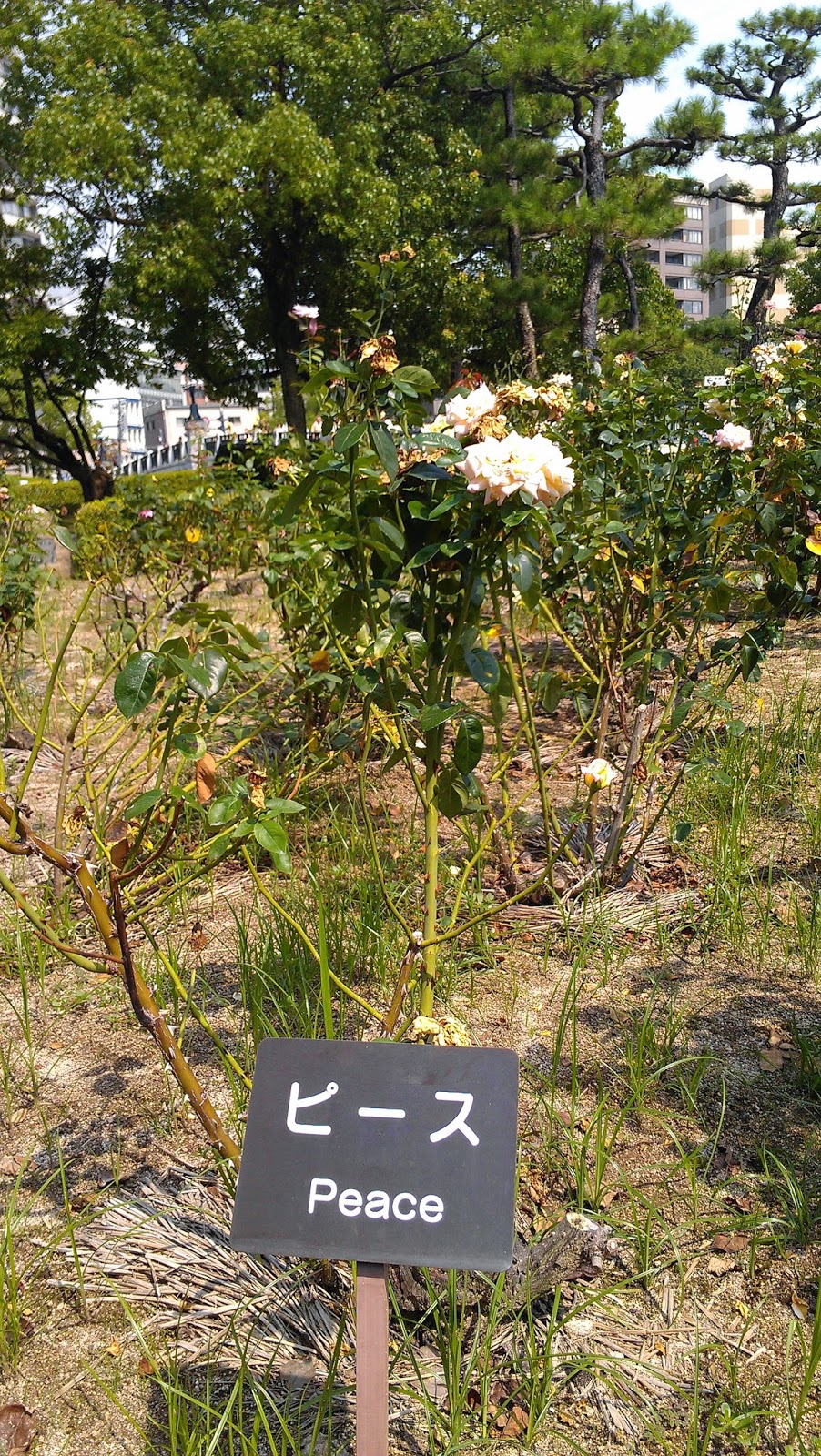
The one thing that really stands out through the whole thing is that the people don’t want revenge, but they want to make sure that this never happens again. The phrase “NO MORE HIROSHIMAS”can be seen all over the town. The word peace is also seen everywhere, a gentle reminder of what we all hope to see in the future.